
Learn
The Do-Anywhere Exercise That Beats Back Pain
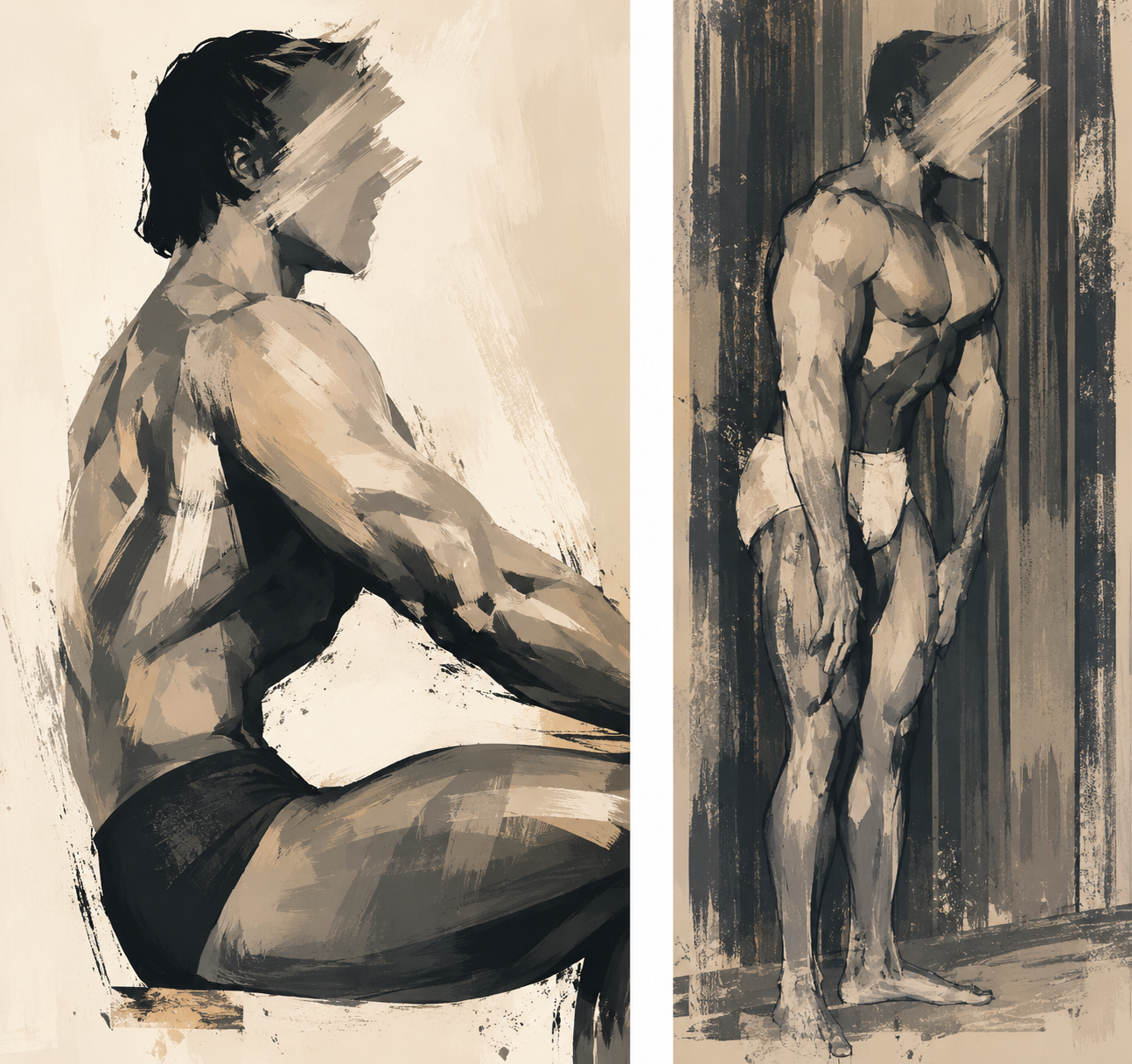
This exercise sucks, literally.
It’s called the “stomach vacuum” or “abdominal drawing-in maneuver” (ADIM). It goes viral on social media every couple of years, so you might have seen it and thought it’s baloney. But it’s a real isometric exercise used for many decades in physical therapy to reduce low-back pain and injury, and popularized in the 1970s by bodybuilders like Arnold Schwarzenegger, Frank Zane, and Lee Haney, who would do the stomach vacuum move to emphasize their chest muscles in physique competitions.
Just as it sounds, you suck in your stomach, drawing your belly button toward your spine by contracting your inner ab muscles, called the transverse abdominals.
“Your transverse abdominals, act as a natural weight belt, like the kind you see workers wear in Home Depot,” explains exercise researcher Ellington Darden, PhD, a pioneer of the Nautilus Training System and author of many books, including Living Longer Stronger and The New High-Intensity Training. “When you contract those muscles that lie horizontally deep underneath your abs, it increases inner abdominal pressure to support your spine.”
Shore Your Core
You’ve probably done a version of this move in yoga class or while walking on a beach in your swimsuit. Here’s the step-by-step:
- Stand tall, back straight, with both hands on your hips.
- Slowly inhale through your nose to fill your lungs.
- Exhale through your mouth and at the same time, slowly “suck in” your belly button toward your spine. It must be done slowly; concentrate on engaging those deep core muscles.
- Hold the abs-in position for 5 to 10 seconds. Breathe normally while holding this position.
- Relax your abs while breathing in slowly. Repeat 3 to 5 times.
You also can do this isometric exercise while lying on your back or stomach on a bed or on all fours.
Darden recommends another way to use the stomach vacuum: before every meal to make you more mindful of what you’re about to put in your stomach.
While the stomach vacuum exercise itself won’t exactly give you a six-pack to show off at the beach, it’s another example of how faking it until you make it actually works. A 2019 study in HSS Journal (The Musculoskeletal Journal of Hospital for Special Surgery) found that this back-supporting move also engages the internal obliques, pelvic floor muscles, diaphragm, and the multifidus, a stabilizer muscle that runs along the length of the spine. Strengthen those muscles and your posture will improve, making you appear taller, leaner, more confident, and sexier to the world.